
Gourmet Cannabis Flavor Starts With Flavor-Forward CDT
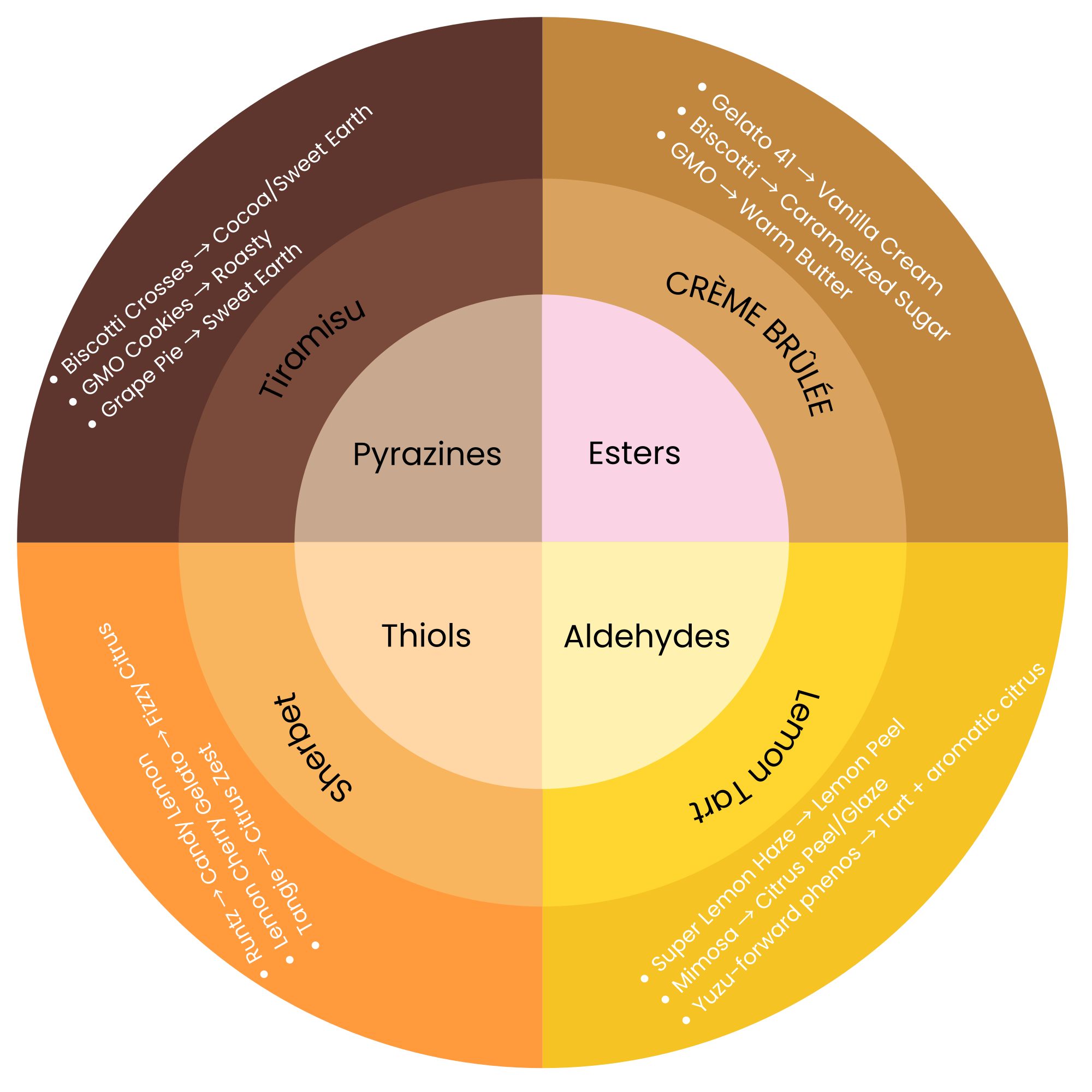
The Pastry Terpene Wheel - A New Way to Decode CDT Flavor
Why Cannabis Flavor Needs a Better Framework
Mapping CDT to Dessert Families
Once you start analyzing CDT the way a chef thinks about flavor structure, four clear families emerge:
Crème Brûlée:
Vanilla cream, caramelized sugar, warm, custardy depth. Classic Gelato 41, Biscotti, GMO. That creamy sweetness? Pure ester retention.
Sherbet:
Zesty citrus, fizzy brightness, candy acidity. Think Runtz, Lemon Cherry Gelato, Papaya Cake. This family lives and dies by aldehydes and limonene derivatives, the stuff most suppliers lose during high-heat processing.
Tiramisu:
Soft cocoa dust, sweet earth, roasted warmth. Biscotti crosses, GMO Cookies, LCG hybrids. These aren’t flavors you “add” – they come from intact aldehydes preserved by extraction done right.
Lemon Tart:
Sharp citrus edge with a buttery finish. Super Lemon Haze, Yuzu-forward Mimosa crosses. When your extraction is sloppy, this becomes “lemon cleaner.” When your extraction is clean, it becomes bakery-level lemon zest.
Why the Wheel Matters for Formulators
Because formulation teams need precision. When you’re developing vapes, gummies, or beverages, “fruity” isn’t enough direction. But “sherbet acidity with high-valencene brightness” is.
It’s why more brands are ditching botanical blends and moving toward real CDT – something we break down in detail in Why Cannabis Brands Are Switching to LiveTerpenes.us.
With the Pastry Terpene Wheel, the conversation finally moves beyond vague tasting notes and into real flavor science. And honestly? It’s about damn time.
CDT Profiles That Mimic Gourmet Flavor Notes
Here’s the part everyone secretly loves: the “wait… cannabis can taste like that?” section.
If you’ve only ever messed with botanicals, you probably think gourmet flavor notes are impossible because, well, botanicals can’t do them. They try to fake it with isolates, but all you get is this weird candy-candle hybrid that tastes like someone melted a Bath & Body Works display.
Real CDT, pulled fresh and extracted gently, is a whole different story.
When esters, aldehydes, and microvolatiles survive extraction, the plant starts showing off.
If you haven’t read our deep dive on these compounds yet, check out What Are Esters, Thiols, and Aldehydes in Cannabis? it’ll make this section hit even harder.
Let’s break down the gourmet side of CDT.
Browned Butter - Warm, Toasted, Rich
You know how butter gets that nutty, golden smell when it hits the perfect temperature? Cannabis can do that too, if you don’t scorch your terpenes into oblivion.
These warm dessert notes come from aldehydes in the C6–C12 range. You’ll find them in strains like:
- Biscotti
- GMO
- Caramel Gelato
- Certain Gelato 41 phenos
The catch? These compounds evaporate if you run high-heat extraction. That’s exactly why low-temp vacuum steam distillation (the thing most suppliers don’t have) matters.
If you want a breakdown of how extraction affects flavor, the blog Elevate Your Cannabis Vape Products with Live Terpenes explains it cleanly.
Citrus Zest & Sherbet - The Bright, Fizzy Stuff
Everybody loves to say “limonene.” Cute. But the real sherbet pop, the bright lemon-peel, candy-citrus, almost-effervescent note, comes from:
- Citral
- Valencene
- Complex limonene derivatives
- Aldehydes linked with citrus rinds
This is why real CDT from Tangie or Super Lemon Haze tastes like someone just zested a lemon over your vape, while botanical blends taste like “citrus cleaning spray, summer edition.”
The sherbet family is huge for beverage formulators too and if you’re building drinks, you’ll love the breakdown in Water-Soluble Terpenes in Cannabis Drinks.
Candied Fruit, Berry Coulis, and Marshmallow Melt
This is where CDT gets downright indulgent.
If you’ve ever hit a cart and thought, “Damn… that tastes like berry syrup on a warm dessert,” you were tasting ethyl esters doing their thing.
These soft, rounded, candy-sweet notes show up in strains like:
- Train-wreck
- Runtz
- Papaya Cake
- Blue Dream
- Cream-heavy Gelatos
And no, you cannot “add” this flavor artificially without it tasting perfume-y. People try. People fail.
This is why consumers who switch to real CDT rarely go back.
Why These Notes Matter for Brands
Gourmet flavor notes aren’t just fun to talk about- they’re the entire future of formulation.
Consumers are bored of “blue razz,” “lemon haze,” and “fruity kush.” Every beverage, edible, and vape brand is fighting over the same five flavor buckets.
But things like:
- browned butter
- citrus zest
- marshmallow melt
- berry coulis
- salted caramel warmth
…these are flavor experiences that consumers don’t already expect and they’re 100% naturally occurring in cannabis.
If you want to build SKUs that don’t taste like everyone else’s? You start here.
And if you want to source CDT that actually captures these notes instead of murdering them, read Where to Source Cannabis-Derived Terpenes Wholesale (Without Getting Burned). It’ll save you years of pain.
Turning Food Trends Into Terp Trends
If you really want to know where cannabis flavor is headed, stop staring at strain names and start watching what flavor Gen Z is drinking, scooping, shaking, and panic-buying every summer.
Cannabis follows the exact same flavor cycles as beverages and desserts ( just on a 2–3 year delay) because it takes extractors a while to realize consumers don’t want “citrus,” they want yuzu spritz.
This is why Live Terpenes treats flavor research more like a culinary lab than a terp supplier. If a trend hits restaurants, boba shops, or grocery shelves, you can bet there’s a CDT lineage that already expresses that profile.
The challenge is preserving the compounds that make it special and most suppliers burn those off faster than you can say “but we added 3% limonene?”
This whole flavor-trend mindset becomes especially important if you’re working in beverages or edibles.
If you haven’t checked it out yet, our breakdown in Water-Soluble Terpenes in Cannabis Drinks gets into how these modern flavor trends translate in liquid formats.
Let’s get into the big ones.
Ube - The Purple Dessert Wave
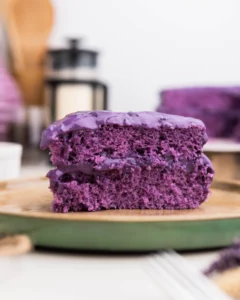
Ube didn’t “trend.” It detonated.
One minute it was a Filipino classic, the next minute every café from LA to Seattle was serving ube lattes, ube soft serve, ube pancakes, ube everything.
Cannabis has been quietly doing ube vibes for years through deep-purple, creamy-estery strains like:
- Purple Punch
- Grape Pie
- GDP
- Ube-inspired Gelato crosses
These profiles hit the sweet–earthy–soft axis that consumers associate with comfort desserts. Brands that catch this early make SKUs that feel instantly modern.
Yuzu - When Citrus Gets Fancy
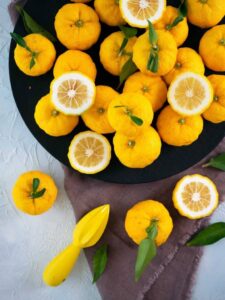
Regular lemon? Boring.
Yuzu? Suddenly everyone thinks they’re in a Michelin kitchen.
Yuzu is high-acid, aromatic, floral, and layered. And cannabis already mirrors it beautifully in strains like:
- Tangie
- Mimosa
- Lemon Royale phenos
- Any citrus-dominant cross with floral aldehyde expression
These flavor arcs are absolute gold for drink formulators. If R&D teams want citrus that hits harder than “lemon-forward,” this is where they start.
Matcha & Green Aromatics - The Clean, Earthy Era
Matcha isn’t just a flavor. It’s a personality trait.
And cannabis hits this lane better than almost any plant-based ingredient on earth. The key is preserving the grassy, creamy aldehydes without letting them turn into “wet lawn.”
You’ll see matcha-adjacent profiles in:
- Jack Herer
- Trainwreck
- Green Crack
- Certain haze-lineage sativas
When extracted cleanly, these profiles feel “zen café,” not “someone mowed wrong.”
Salted Caramel - Sweetness With Depth
Salted caramel works because it’s sweet, warm, buttery, and a little savory all at once.
Cannabis aldehydes can create the same dimension – if you extract them right.
Look at:
- Biscotti
- Caramel Gelato
- GMO (yes, surprisingly complex)
These strains carry a caramelized-sugar warmth most people don’t realize cannabis can naturally express.
Pink Lemonade, Candy Citrus & Modern Sweetness

Pink flavors sell better than almost anything else right now.
It doesn’t matter the product category – beverages, mocktails, gummies, vapes, EVERYTHING.
Cannabis already gives you those naturally:
- Pink Runtz
- Strawberry Lemonade
- Pink Rozay
- Certain Sherb phenos
The aldehydes in these strains give you that pop-hit “candy citrus,” without tipping into artificial territory.
If your formulation team wants to stay ahead of the curve, this is where you live.
And if you want to understand why brands are shifting harder into CDT for trend-driven SKUs, read Why Cannabis Brands Are Switching to LiveTerpenes.us – it breaks down the entire shift.
Why Trend-Based CDT R&D Works
Because consumers don’t buy “chemotypes.”
They buy flavor languages they already recognize.
When you take a cultural food trend and map it to CDT genetics, you create SKUs that feel instantly familiar without tasting artificial. That’s the sweet spot where cannabis wins.
If you want the long-term flavor roadmap, the stuff that will matter 12–36 months out then trend-based CDT work is the closest thing you’ll get to future-proofing your product line.
Why Live Terpenes Leads the Flavor-Forward CDT Movement
Look – a lot of suppliers talk about “premium terpenes.” Cute slogan, but here’s the question nobody ever asks them:
Premium compared to what?
Because if your terpenes were extracted weeks after harvest, blasted with too much heat, filtered through three layers of wishful thinking, and topped off with botanicals… congratulations, you didn’t make CDT. You made aromatherapy with branding.
Live Terpenes leads this flavor-forward movement because we don’t cheat the plant.
We don’t “rebuild” flavors.
We don’t “enhance” profiles with candy chemicals.
We don’t “blend for consistency” because our CDT is already consistent -fresh inputs lead to stable outputs.
Our edge comes down to three things: the way we harvest, the way we extract, and the way we refuse to dilute.
The 30-Minute Harvest Standard
Most terpene suppliers start extraction long after the flower has already lost half its volatile compounds.
We don’t play that game.
Our workflow is simple:
Harvest → Transport → Extract → Filter
All within 30 minutes, while the material is still in its peak aromatic phase.
That’s how we hold onto esters, aldehydes, and bright top notes that other brands repeatedly kill, something we explained in Elevate Your Cannabis Vape Products with Live Terpenes.
When your inputs are alive, your outputs taste alive.
It really is that simple.
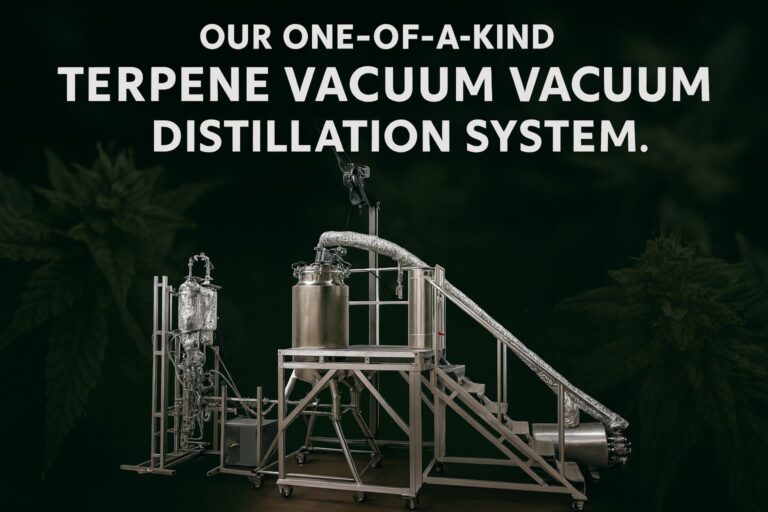
Low-Temperature Vacuum Steam Distillation (The Secret Weapon)
Here’s the part extraction nerds love:
We run vacuum steam distillation at sub-boiling temperatures to preserve every delicate compound that gives CDT its dessert-level complexity.
Most suppliers use heat that would melt the side of a barn.
Good luck keeping sherbet acidity or berry-coulis esters intact with that approach.
Vacuum distillation means:
- We never scorch terpenes
- We never “cook out” the buttery aldehydes
- We never flatten tropical thiols
- We never turn lemon zest into lemon cleaner
This is why our flavor arcs don’t collapse when mixed into vapes, gummies, or beverages.
Molecular Filtration That Respects the Plant
Some suppliers think filtration means “strip out everything and pray the profile survives.”
Nope.
Our post-extraction molecular filtration removes:
- harsh grassy compounds
- chlorophyll residues
- sulfuric off-notes
- unwanted bitterness
But, and this is the important part, it does not touch:
- fruity esters
- creamy backnotes
- aldehydes responsible for caramel & citrus
- microvolatiles that give CDT its personality
It’s cleaning without sterilizing.
It’s refinement without erasing character.
It’s why brands switching from botanical blends suddenly say, “Oh… this is what cannabis actually tastes like.”
If you haven’t seen that shift happen across the market, read Why Cannabis Brands Are Switching to LiveTerpenes.us – it breaks down the whole trend.
Why Brands Choose Live Terpenes Over Botanicals
Simple: formulation teams want flavor that feels real.
Botanical blends always taste a little too perfect and consumers can tell.
CDT gives you depth, natural imbalance, texture, warmth, and those tiny imperfections that feel human.
When brands switch to Live Terpenes, they get:
- Flavor that stands on its own
No sweeteners or masking agents needed.
- Profiles that match strain expectations
Your “Runtz” actually tastes like Runtz.
- Better performance across formats
Vapes, gummies, pre-rolls, and drinks don’t require flavor band-aids.
- Predictable input quality
But honestly?
Most brands switch because once they taste fresh CDT that hasn’t been cooked to death, there’s no going back.
The Real Reason We Lead: Humboldt Doesn’t Do Fake Flavor
We’re a Humboldt-born operation.
That means we’ve been studying this plant since before it was fashionable.
We’ve smelled every phenotype, trimmed more plants than some people have eaten meals, and seen what real flavor looks like straight off the stalk.
We learned early:
If you respect the plant, the plant gives you magic.
If you cut corners, it gives you mediocrity.
Live Terpenes leads the flavor-forward CDT wave because we don’t manufacture magic, we just refuse to lose it.
The Future of Gourmet Cannabis Flavor R&D
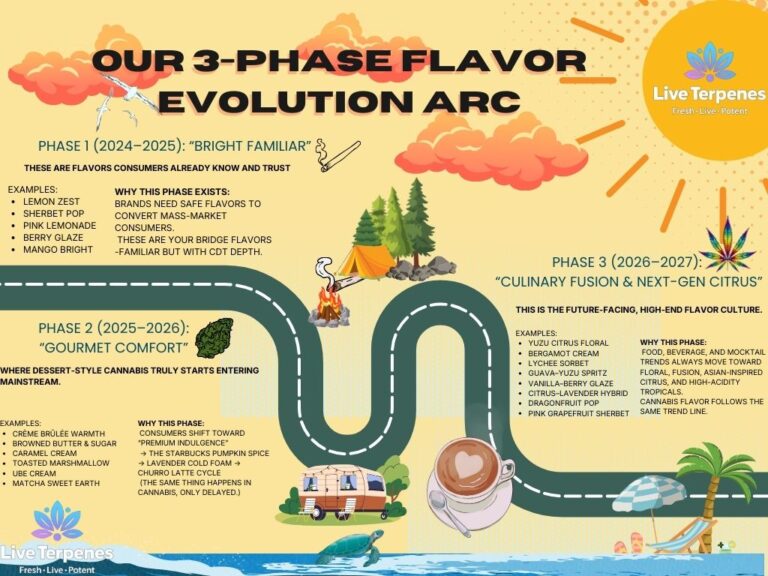
If the last few years taught us anything, it’s that cannabis flavor follows the same rhythm as food and beverage culture – just with a little lag because everyone’s too busy chasing Lemon Haze nostalgia. But 2026–2027?
That’s when the big shift lands. Consumers are getting more adventurous, more ingredient-aware, and way more sensitive to anything that tastes artificial or “lab-built.”
And that’s great news for CDT because flavor trends are leaning hard toward natural, layered, culinary-style profiles.
No more “blue razz” and “tropical blast.” More like:
- citrus-lavender spritz
- creamy lychee sorbet
- blueberry-mint cooler
- toasted sugar + berry glaze
- matcha–vanilla swirl
- guava–yuzu spritz
These aren’t fantasies; these are actual volatile patterns we see in fresh cannabis if you preserve them right.
Below are the cycles we’re already predicting based on food, drink, and functional beverage data.
Trend #1: Citrus + Floral Hybrids
2025 is the year citrus graduates from “lemon” and becomes… well, interesting.
You’re going to see huge demand for citrus blends that have depth – yuzu, pomelo, bergamot, mandarin zest with floral energy.
CDT matches this perfectly in Tangie, Mimosa, Lemon Royale, and certain Haze crosses.
Brands that nail the citrus–floral balance early will have a massive head start.
Trend #2: Modern Dessert Comforts
Consumers want flavor profiles that feel nostalgic without tasting childish.
Think:
- toasted marshmallow
- caramelized sugar
- brown butter
- raspberry pastry
- vanilla cream + berry glaze
These show up shockingly often in Gelato, Biscotti, Grape Pie, and Zkittlez lineages as long as the esters survive extraction.
Most suppliers lose these compounds within seconds. That’s why our 30-minute harvest standard matters.
Trend #3: Tropical Sharpness (Not Tropical Syrup)
The new tropical wave is bright, sharp, and refreshing – guava, passionfruit, dragonfruit, pink citrus.
Not “mango candy.” Not “pineapple gummy ring.”
Consumers want vacation-in-a-bottle, not vape-store nostalgia.
CDT strains like Papaya, Guava Gelato, and pink Runtz phenos naturally hit those thiol-rich, high-acid notes.
Trend #4: Clean Green & Matcha Energy
Functional beverages made “green flavor” cool again.
Matcha lattes, cucumber-mint spritzers, botanical sodas – people want flavors that taste clean, not chemical.
This lines up perfectly with Jack Herer, Green Crack, and Trainwreck profiles, especially when filtered right (not grassy, not harsh).
Trend #5: Pink Flavors Run the Market
It’s almost cheating at this point – pink flavors always sell.
Pink lemonade, pink guava, strawberry citrus, pink rosé aromatics… doesn’t matter.
If it’s pink, the SKU moves.
Cannabis already has these in Pink Runtz, Strawberry Lemonade, and Hibiscus-forward crosses.
What This Means for Brands
Flavor R&D isn’t about guessing – it’s about reading cultural data and matching it to actual strain chemistry.
And if you want to build SKUs that stay relevant beyond “whatever’s trending this week,” you need to understand where food and beverage flavor cycles are headed.
That’s exactly where Live Terpenes is building.
We don’t just extract CDT – we build flavor roadmaps with formulation teams.
If you want a signature flavor line, a co-developed SKU drop, or a strain-inspired seasonal release, this is where the magic happens.
We’re already developing flavor-forward CDT sets for vape brands, gummy labs, and beverage manufacturers who want to get ahead of the 2025–26 curve instead of chasing it.
If you want to co-develop something that hits the market before everyone else figures out how to spell “yuzu,” you know where to find us.
The Future Belongs to Flavor-Forward CDT
At some point, the cannabis industry has to admit what consumers already figured out: flavor matters. Not generic “citrus” or “fruity” or “earthy.” Not blue razz reruns.
Real flavor, the kind that feels layered, culinary, and unmistakably natural.
Live Terpenes didn’t stumble into this movement. We built around it.
From 30-minute harvest standards to low-temp vacuum steam distillation, our entire workflow is designed to keep the compounds other suppliers lose: the sherbet pop, the caramel warmth, the berry glaze, the tropical acidity.
The stuff that makes CDT feel alive.
As cannabis moves into its gourmet era, brands that lean into flavor-forward CDT will have a massive edge in vapes, in gummies, in beverages, in every format where taste is the deciding factor.
And if you want to develop flavors that feel two years ahead of the market instead of two steps behind it, this is where the roadmap starts.
Request a Flavor R&D Sample Pack
If you’re ready to taste CDT the way the plant meant it – fresh, layered, and unmistakably cannabis, reach out.
We’ll send you a Flavor R&D Sample Pack and the full Pastry Terpene Wheel to guide your next formulation.