
1. Why Heat Stability Matters in Terpene Formulation
When formulators talk about “flavor,” “aroma,” or “strain authenticity,” they’re ultimately talking about one thing: terpenes under heat. Whether you’re producing a live resin vape, a solventless rosin pen, an infused pre-roll, or a citrus-forward gummy, the true test of your terpene blend isn’t how it smells in the bottle, it’s how it performs when exposed to heat, oxygen, and time.
Cannabis-derived terpenes (CDTs) are naturally volatile compounds. Volatility is what makes them aromatic and expressive, but it’s also what makes them fragile. Each terpene has a unique boiling point, evaporation rate, and sensitivity to processing conditions. When a formulation exceeds these thresholds, the result is predictable: muted flavor, harshness, chemical-tasting degradation, or a profile that no longer reflects the original strain.
In high-heat applications, especially distillate vapes and dabbing concentrates, temperature spikes of 300–450°F can quickly destroy lighter aromatics like linalool, nerolidol, geraniol, and almost all esters. In low-heat systems like edibles, beverages, and pre-rolls, the problem isn’t intense heat but prolonged exposure to thermal cycles during baking, extrusion, or combustion. Many brands lose 40–70% of desirable top notes simply because the wrong terpene choices were made for the product format.
This guide breaks down the science behind heat stability, compares high-heat vs low-heat compatible terpenes, and explains why Live Terpenes’ ultra-low-temperature extraction preserves compounds that other suppliers lose. By the end, you’ll know exactly how to choose the right CDT for vapes, edibles, beverages, pre-rolls, and concentrates, and how to protect your strain’s identity through every step of production.
The Cost of Flavor Loss
Imagine this: you spend weeks perfecting a Lemon Haze vape, but by the time it reaches the consumer’s lips, all that’s left is a bland, generic sweetness. Why? Because limonene, one of the key terpenes in Lemon Haze, boils off at just 176°C (348°F). If your formulation or hardware doesn’t account for that, it’s gone before the first puff.
This isn’t just about flavor; it’s about consumer experience and product identity. Cannabis customers today are savvy. They expect a vape labeled “Zkittlez” to taste like the real strain. They want edibles that don’t just taste like sugar, but like the flower that inspired them. And they’re willing to pay more for it.
Why Stability = Consistency
Heat-stable terpene blends offer something most brands overlook: consistency across batches and formats. A distillate vape using robust, high-boiling-point terpenes is more likely to taste the same from the first hit to the last. A pre-roll using carefully selected esters and aldehydes can preserve delicate notes when smoked at lower temps.
- Distillate vapes: Exposed to temperatures of 200–250°C during use.
- Rosin pens: Heat varies, but terpene degradation is common.
- Edibles: Cooking temperatures can exceed 150°C.
- Pre-rolls: Combustion reaches 600°C+ at the cherry, but cannabinoids and terpenes vaporize at lower temps in surrounding areas.
Knowing how your chosen terpenes react at each stage—from infusion to consumption—allows you to make smarter formulation choices. And that’s where heat stability becomes your most powerful tool in terpene design.
Next, lets break down the boiling points and volatility of major cannabis-derived terpenes, so you can build flavor that lasts.
2. Terpene Boiling Points and Volatility Chart
To design formulations that retain their full aromatic character, formulators must understand the boiling points and volatility behaviors of individual terpenes. These properties determine which compounds survive high-heat applications like vapes and dabs, and which ones are better suited for low-heat formats like gummies, beverages, and pre-rolls. Boiling point awareness is one of the most critical factors influencing the heat stability of cannabis terpenes.
Most cannabis terpene profiles are built from a combination of monoterpenes (lighter, more volatile), sesquiterpenes (heavier, more stable), and a spectrum of esters, aldehydes, thiols, and alcohols that provide fruity, floral, and exotic top notes. While these minor compounds contribute enormous sensory value, they are also the first to evaporate during processing.
Below is a reference chart of major cannabis terpenes, their boiling points, and formulation notes to guide product developers in selecting the right terpene structure for each application.
Terpene Boiling Point & Volatility Reference
| Terpene | Boiling Point (°F) | Volatility | Formulation Notes |
|---|---|---|---|
| α-Pinene | 311°F | High | Bright pine note; evaporates quickly in vapes; stabilizes well in pre-rolls. |
| β-Pinene | 329°F | High | Useful for citrus-pine blends; prone to oxidation if overheated. |
| Limonene | 349°F | Medium-High | Excellent for sativa profiles; sensitive to heat spikes above 350°F. |
| Linalool | 388°F | Medium | Lavender floral note; fragile in high-heat distillate vapes; ideal for edibles. |
| Myrcene | 332°F | High | Heavy in indica strains; evaporates rapidly; must be stabilized carefully. |
| Caryophyllene | 266°F | Low | Highly heat stable; ideal for vapes, concentrates, and hot-fill applications. |
| Humulene | 225°F | Low | Woody and earthy; strong heat durability; useful for base structure. |
| Nerolidol | 252°F | Medium-Low | Exotic floral; heat-sensitive but stable in controlled low-temp systems. |
| Terpinolene | 366°F | Medium | Dominant in Jack Herer-type strains; can degrade into off-notes if overheated. |
| Geraniol | 447°F | Medium-Low | Highly aromatic; survives low-heat formats but oxidizes under prolonged high heat. |
It’s important to note that boiling points alone don’t determine real-world performance. Volatility increases dramatically when oxygen and heat interact simultaneously, especially during distillation, decarboxylation, hot-fill cart production, and post-processing in rosin extractions. For example, although linalool has a higher boiling point than limonene, it is significantly more fragile due to oxidative stress.
This means that monoterpenes are the first to disappear in high-heat applications, while sesquiterpenes remain stable and provide a strong foundation for vape profiles. Meanwhile, delicate esters and aldehydes (which give cannabis its tropical, candy-like, or fermented fruit notes) cannot withstand temperatures above 200–220°F, making them much better candidates for edibles, beverages, tinctures, and pre-roll atomization.
Understanding this breakdown is the key to preserving strain authenticity. By matching terpene volatility to the product’s expected thermal exposure, formulators can avoid common problems such as burnt flavors, terpene flattening, fading over shelf life, and the “chemical aftertaste” often caused by compensating with excess botanicals.
So, which cannabis-derived terpenes perform best in high-heat formats like vapes and extracts and why some strains feel fuller, smoother, and more expressive when built on heat-stable sesquiterpene backbones?
3. High-Heat Applications: Best CDTs for Vapes & Extracts
When it comes to vape pen strains, not all terpenes are built to survive the heat. Whether you’re formulating live resin pens, distillate carts, or dabs, the challenge is the same: preserve as much of the terpene fingerprint as possible during both processing and consumption. Terpenes are notoriously volatile, and high temperatures can lead to rapid degradation, muting the flavor and effects that define a strain.
So how do you build a true-to-strain flavor profile that stands up to the high-temp demands of vape hardware? Let’s start with the basics.
What Happens to Terpenes in Vape Pens?
In most vape pens, heating elements operate between 180°C and 230°C. That range easily exceeds the boiling points of many major terpenes—especially delicate esters and aldehydes that contribute to fruity and floral notes. These compounds often burn off first, leaving behind harsher, less dynamic flavors. That’s why some vapes taste flat, burnt, or overly sweet despite promising “strain-inspired” experiences.
To combat this, formulating with heat-resilient cannabis-derived terpenes (CDTs) is key. These are not only naturally sourced but also preserved to retain their full spectrum, making them ideal for high-heat applications.
High-heat applications like distillate vapes, solventless rosin pens, live resin carts, and dab products demand a terpene profile that can withstand temperature spikes without burning off or degrading into harsh, chemical-tasting byproducts. In these formats, the heat stability of cannabis terpenes becomes the difference between a smooth, full-bodied experience and a sharp, muted, or inconsistent product.
Most vape hardware reaches temperatures between 320°F and 450°F depending on voltage and coil material. Dabbing applications can exceed 500°F. These temperatures are far above the evaporation point of many monoterpenes and nearly all esters, which means formulations must be strategically designed to retain structure and flavor during use.
What Makes a Terpene High-Heat Compatible?
- Higher molecular weight → Sesquiterpenes degrade more slowly.
- Lower oxidative reactivity → Reduces harshness and aftertaste during vaporization.
- Stable boiling point ranges → Prevents rapid evaporation when the coil heats up.
- Structural resilience → Certain cyclic terpenes remain intact longer under thermal stress.
This is why top-performing vape and extract formulations rely on a backbone of sesquiterpenes, supplemented by carefully selected monoterpenes that can withstand short bursts of high heat when vaporized.
Top Heat-Stable CDTs for Vape & Concentrate Formulation
| Terpene | Best Use Cases | Why It Performs Well Under Heat |
|---|---|---|
| β-Caryophyllene | Distillate vapes, live resin carts, dabs | Highly heat-stable; adds spicy depth; enhances smoothness and mouthfeel. |
| Humulene | Vapes & rosin pens | Resistant to oxidation; creates a woody, earthy base that anchors lighter terpenes. |
| Nerolidol | High-end liquid diamonds, cured resin carts | Low reactivity; provides a floral foundation that doesn’t scorch or flatten. |
| Bisabolol | Distillate & CO₂ carts | Smooth, creamy note; stabilizes fruity profiles during high-temp cloud production. |
| Terpinolene (moderate use) | Jack Herer, Dutch Treat, Sativa carts | Well-balanced stability when blended; requires careful heat control to avoid degradation. |
High-Heat Formulation Strategies
To retain full strain expression in vape and dab formats, formulators should:
- Build the structure first using sesquiterpenes like caryophyllene and humulene.
- Layer mid-volatility monoterpenes such as limonene and terpinolene for brightness.
- Avoid heat-fragile esters and aldehydes that will burn off instantly in vaporization.
- Use CDTs extracted at low temperatures to preserve minor compounds that enhance nuance.
- Match terpene load to hardware voltage to avoid scorching the blend.
LiveTerpenes excels in high-heat applications because our proprietary low-temp vacuum steam distillation process preserves the heavier, more resilient compounds that truly define strain identity. Instead of relying on botanicals or isolates to rebuild burnt-off flavors, you start with a profile that is naturally strong enough to withstand the heat.
When vaporized, these heat-stable Live Terpenes deliver:
- A smoother inhale with reduced throat burn
- Fuller body and strain accuracy
- Better cloud density and flavor persistence
- Longer stability inside the cart over time
Real-World Use Case: Live Resin Pens with Triangle Kush CDT
One of our partner brands recently reformulated a best-selling live resin pen using Triangle Kush CDTs from LiveTerpenes. The original cart had solid potency but lacked depth in aroma and flavor. By integrating our CDT blend post-extraction, they were able to deliver a terpene-rich experience with spicy, earthy, and gassy notes that stayed consistent across multiple rips. Feedback from their internal R&D panel showed:
- 35% increase in perceived flavor complexity
- 22% longer retention of flavor over multiple draws
- Higher ratings in blind tests vs. botanical blends
Heat stability isn’t just a technical detail, it’s a competitive advantage. When your vape pen strains deliver a terp-rich, true-to-strain experience, customer loyalty follows.
With the right terpene backbone, high-heat formats no longer compromise on flavor or authenticity. It’s time to flip the script and explore low-heat environments where an entirely different class of terpenes becomes the star.
4. Low-Heat Applications: Ideal Terpenes for Edibles & Pre-rolls
Not all cannabis products face extreme temperatures. In edibles, beverages, tinctures, and pre-rolls, the challenge is not combustion-level heat but longer thermal exposure during baking, infusion, curing, and storage. Low-heat applications allow formulators to work with a broader aromatic palette, including esters, aldehydes, and oxygenated terpenes that would instantly burn off in vape systems. Understanding the heat stability of cannabis terpenes in these gentler environments is key to designing products with rich, expressive, and lasting flavor.
In edibles, terpenes may be exposed to temperatures between 180°F and 250°F, depending on the cooking method. Pre-rolls don’t experience uniform burn temperatures; instead, they rely on aromatic release during the smolder phase, which often stays below full combustion temperatures. This slow vaporization opens the door to compounds that make gummies taste juicier, chocolates more decadent, and pre-rolls more fragrant.
Why Low-Heat Products Can Use More Delicate Aromatics
- Gentle heating allows fragile compounds to remain intact during infusion.
- Esters and aldehydes shine because they volatilize at lower temperatures, creating strong fruit and dessert notes.
- Minor compounds last longer because they are not subjected to direct high-heat vaporization.
- Flavor complexity increases when light aromatics evaporate slowly instead of burning off instantly.
Top Terpenes & Compounds for Low-Heat Applications
| Compound Type | Examples | Best Use Cases | Notes |
|---|---|---|---|
| Esters | Methyl butyrate, ethyl hexanoate | Gummies, beverages, chocolates | Incredibly aromatic; create tropical, candy-like, and creamy notes. |
| Aldehydes | Hexanal, octanal, benzaldehyde | Edibles, pre-roll flavor enhancement | Provide citrus peel, floral, and fruity aromas; highly volatile but beautiful in low-heat release. |
| Linalool | Lavender, floral terpene | Chocolates, gummies, tinctures | Delicate but stable under mild heating; adds depth and relaxation-forward notes. |
| Nerolidol | Floral, apple-peel note | Pre-rolls & infused flower | Slow aromatic release enhances smoothness and complexity. |
| Geraniol | Rose-like aromatic | Beverages, tinctures, artisan edibles | Survives low-heat infusion and brings elegant, high-end floral complexity. |
Formulating for Edibles & Beverages
Unlike vape products that require structural terpenes, edibles benefit from volatile top notes. A terpene that evaporates quickly in air may actually be ideal for a gummy, where slow release from gelatin amplifies fruity or citrus-forward aromas.
Best practices include:
- Introduce terpenes at the lowest possible temperature point in the cooking process.
- Use encapsulation or nano-emulsification for beverages to prevent terpene separation.
- Favor food-forward compounds such as esters and aldehydes.
- Use CDTs over botanicals to maintain strain identity even in sweet applications.
Formulating for Pre-rolls
In pre-rolls, terpenes vaporize well before the material combusts. This “aroma halo” is where delicate compounds shine. Sesquiterpenes add structure and cling to plant material, while lighter aromatics create the top notes that consumers perceive as freshness, fruitiness, or floral lift.
LiveTerpenes extracts preserve these heat-sensitive compounds better than traditional steam distillation, making them ideal for low-heat formats where nuance matters. Whether you’re building a dessert gummy or a craft pre-roll line, selecting the right class of terpenes is essential for preserving flavor, complexity, and strain fidelity.
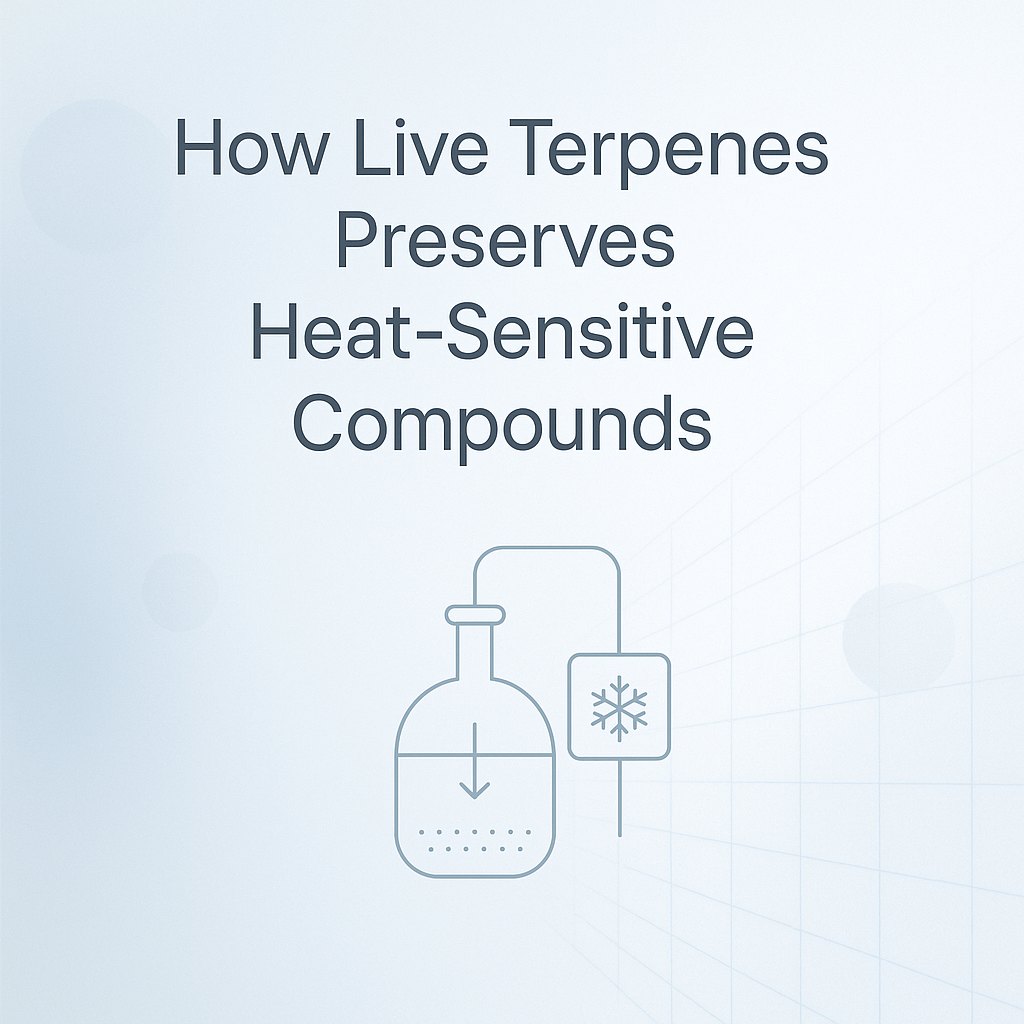
5. How Live Terpenes Preserves Heat-Sensitive Compounds
Most terpene suppliers rely on traditional steam distillation — a process that can expose plant material to temperatures above 212°F for extended periods. While effective for bulk essential oils, this method destroys many of the fragile compounds that make cannabis strains unique. By the time most terpenes reach formulators, esters, aldehydes, thiols, and oxygenated aromatics have already degraded. This compromises both strain authenticity and the heat stability of cannabis terpenes in the final product.
LiveTerpenes was founded to solve this exact problem. Our proprietary low-temperature vacuum steam distillation + post molecular filtration process is engineered specifically for cannabis — not repurposed from the fragrance industry. By controlling pressure, temperature, and oxygen exposure at every stage, we preserve compounds that other processes cannot capture.
Step 1: Harvest-Within-30-Minutes Capture
The terpene profile of cannabis begins degrading almost immediately after harvest. By extracting within 30 minutes of cutting, Live Terpenes captures the full volatile range before oxidation begins. This early capture is especially important for:
- Esters (tropical, candy-like notes)
- Thiols (fuel, skunk, savory aromas)
- Aldehydes (citrus peel, fruity brightness)
- Light monoterpenes prone to rapid volatilization
Without immediate processing, these compounds disappear long before distillation even begins. Our harvest-side workflow ensures that your strain’s delicate top notes are never lost.
Step 2: Low-Temperature Vacuum Steam Distillation
Vacuum pressure lowers the boiling point of volatile compounds. By reducing atmospheric pressure, we can distill at well below standard boiling temperatures, allowing incredibly fragile aromatics to pass through the system without thermal degradation.
This is the opposite of conventional steam distillation, where extreme heat drives off only the most resilient terpenes. With our method, even compounds with ultra-low boiling points and high oxidative sensitivity, like methyl butyrate, β-ocimene, benzaldehyde, and certain sulfur-containing thiols, survive intact.
Step 3: Oxygen-Free Pathway
Oxidation is a silent killer of terpene quality. Even if temperatures are controlled, exposure to oxygen can flatten a profile or shift it into sharp, soapy, or medicinal notes. Live Terpenes uses an oxygen-restricted closed-loop system to prevent oxidative stress throughout the extraction process.
This ensures:
- No terpene polymerization or cross-reaction
- No conversion of monoterpenes into degraded byproducts
- Longer shelf life and better flavor integrity in finished goods
Step 4: Post Molecular Filtration
After low-temp extraction, the terpene mixture undergoes a precision molecular filtration phase. This step removes undesirable artifacts such as residual plant waxes, chlorophyll volatiles, and harsh-tasting compounds — leaving behind only the clean, strain-specific aromatic fingerprint.
This dual-stage process results in CDTs that are:
- More heat-stable because fragile compounds are preserved at the molecular level
- More structurally complete than botanical blends or standard steam distillates
- More predictable across high-heat and low-heat formulations
- More compatible with vapes, edibles, beverages, pre-rolls, and concentrates
Why This Matters for Formulators
Because Live Terpenes preserves the full spectrum — not just the rugged sesquiterpenes — our CDTs behave more like the fresh plant during application. Whether exposed to 400°F in a vape coil or 200°F in gummy infusion, the terpene structure holds up longer, tastes better, and retains its strain identity throughout the product lifecycle.
It’s time for the ultimate Formulator’s Matrix: a clear, side-by-side guide showing exactly which terpene structures work best for each product category.
6. Formulator’s Matrix: Choosing the Right CDT for the Right Format
Every cannabis product exposes terpenes to a different thermal environment. Distillate vapes, rosin pens, gummies, beverages, pre-rolls, tinctures, and dabs all place unique demands on the aromatic structure. This is where understanding the heat stability of cannabis terpenes becomes not just a scientific advantage, but a practical formulation tool.
Below is a comprehensive matrix showing exactly which terpene classes and compounds perform best in each product type and why. Formulators can use this as a quick-reference blueprint when designing new SKUs or troubleshooting flavor loss, oxidation, harshness, or instability in existing ones.
Terpene Compatibility Matrix by Product Type
| Product Type | Recommended Terpenes | Avoid / Use Sparingly | Why This Works |
|---|---|---|---|
| Distillate Vapes | β-Caryophyllene, Humulene, Nerolidol, Bisabolol, Terpinolene (controlled) | Fragile esters, aldehydes, light monoterpenes (linalool, ocimene) | High-heat requires structural terpenes; sesquiterpenes resist oxidation and scorching. |
| Live Resin / Liquid Diamonds | Sesquiterpenes + mid-volatility monoterpenes (limonene, terpinolene) | Highly volatile esters | Extracts already have nuance—CDTs should reinforce structure, not overwhelm. |
| Solventless Rosin Pens | Nerolidol, Bisabolol, Caryophyllene, floral mid-volatiles | Esters with <200°F boiling points | Solventless has delicate top notes; use terpenes that enhance smooth vapor release. |
| Dabs (Badder, Sugar, Diamonds + Sauce) | Humulene, Caryophyllene, Nerolidol, Myrcene (controlled) | Aldehydes and unstable oxygenated terpenes | Dabbing temperatures are extreme; only resilient compounds retain structure. |
| Gummies | Esters, aldehydes, linalool, geraniol, fruity & floral minor compounds | Heavy sesquiterpenes that overpower flavor | Low-heat infusion allows fragile aromatics to shine; great for fruit-forward profiles. |
| Beverages | Esters, aldehydes, geraniol, bright monoterpenes (limonene in moderation) | Heavy terpenes that cause ring or separation issues | Rapid volatilization improves aroma; lighter compounds emulsify more cleanly. |
| Infused Pre-rolls | Linalool, Nerolidol, Humulene, geraniol, esters (light application) | Overly reactive monoterpenes that create bite on combustion | Aromatics vaporize during the smolder phase; subtle compounds = better flavor bloom. |
| Tinctures | Linalool, Nerolidol, Geraniol, fruit esters | Volatile terps that oxidize rapidly when exposed to light and air | Non-heated format allows food-like aromatics to provide elegance and complexity. |
How to Use the Matrix for Real-World Formulation
A simple rule of thumb ties this entire matrix together:
Use heavier, more stable terpenes for high-heat applications; use lighter, more expressive terpenes for low-heat formats.
Here’s how formulators can apply it:
- Start with stability first → Build the backbone with terpenes that won’t degrade.
- Layer delicacy only if the process permits → Add esters or aldehydes only in low-heat settings.
- Match terpene volatility to expected temperature exposure.
- Design for the final user experience, not just the raw terpene aroma.
- Choose CDTs based on real strain chemistry rather than botanical imitations or isolate blends.
LiveTerpenes makes this process easier because our low-temp, oxygen-free extraction preserves a broader spectrum of cannabis compounds. This gives formulators more room to design SKUs that are not only flavorful, but heat-stable, shelf-stable, and true to the strain’s genetic profile.
7. Wrap-Up: Don’t Just Chase Flavor, Preserve It
In today’s competitive cannabis market, brands can no longer afford terpene systems that collapse under heat, fade during storage, or lose their identity during processing. Consumers may not know the underlying chemistry, but they can immediately tell when a product tastes dull, harsh, or “off” after a few uses. The difference almost always comes down to one factor: heat stability of cannabis terpenes.
For years, terpene formulation was driven by aroma-first thinking. If the raw terpene blend smelled good in the bottle, formulators assumed it would translate into a finished product. But as the industry matures, this approach is falling short. True formulation success depends not on how terpenes smell in isolation, but on how they behave under the thermal reality of the product you’re creating whether that’s 400°F inside a vape coil or 200°F inside a gummy kettle.
This guide has walked through the essential principles every formulator should consider:
- Understanding volatility so flavor and aroma don’t evaporate during production.
- Using boiling point data to predict real-world performance.
- Selecting heat-stable sesquiterpenes for vapes, extracts, and dabs.
- Leveraging delicate esters and aldehydes for low-heat formats like gummies and pre-rolls.
- Choosing extraction methods that preserve compounds most suppliers lose.
- Matching terpene profiles to product types using a clear, chemistry-backed matrix.
Across every section, one theme is clear: formulation is strategy. The most successful brands aren’t chasing flavor trends—they’re engineering products that retain their flavor, consistency, and strain identity from manufacturing to consumption. This is why understanding thermal behavior is no longer optional. It is a competitive advantage.
Where Live Terpenes Fits Into That Strategy
LiveTerpenes was built for formulators who demand more than generic botanical blends and high-temp steam distillates. Our proprietary low-temp vacuum steam distillation paired with post molecular filtration captures a broader, more delicate aromatic range than traditional methods. That means:
- Better stability in vapes and concentrates
- Richer expression in pre-rolls and infused flower
- Brighter, truer flavors in gummies and beverages
- Longer shelf-life across all formats
Because our CDTs preserve heat-sensitive compounds that other suppliers lose, formulators can build products that maintain authenticity from day one to day 120—without over-terping, masking agents, or artificial botanicals. The result is a cleaner, smoother, more true-to-strain experience that consumers feel immediately.
The Future Belongs to Formulators Who Build for Experience
As the cannabis industry evolves, the brands that stand out won’t simply be the ones with the loudest flavors—they’ll be the ones whose products perform consistently at every temperature, in every format, across every batch. Heat stability is not a technical detail. It is the foundation of a premium consumer experience, and understanding it unlocks higher retention, better reviews, and stronger repeat sales.
Whether you’re launching a new vape line, elevating your edible SKUs, or developing a flagship pre-roll brand, the right terpene strategy will determine the difference between a product that sells—and a product that lasts. Don’t just chase flavor. Preserve it.
Ready to build heat-stable, strain-authentic formulations? Explore our strain-specific CDT catalog or contact Live Terpenes for formulation support.