
The cannabis vape market is entering a new phase, driven less by novelty and more by regulation, repeat use, and product scrutiny. Recent momentum around federal cannabis rescheduling, including renewed efforts to move cannabis to Schedule III, has pushed brands to rethink how they formulate, document, and scale products.
Schedule III does not legalize cannabis, but it does signal a structural shift. Regulators now treat cannabis less as an exception and more as a regulated category with clear expectations around consistency, traceability, and product integrity. As this shift unfolds, brands are scrutinizing formulation inputs that once received little attention. Flavor systems are part of that evaluation.
Vape consumers today are more experienced. They notice when flavor feels artificial, inconsistent, or harsh, especially across batches. At the same time, brands are operating in a landscape where differentiation must hold up under regulatory review, not just marketing claims. Potency and hardware alone are no longer enough to stand out.
Live terpenes are gaining traction in this environment because they address both pressures. Captured from fresh plant material before volatile compounds degrade, live terpene profiles retain a chemical balance closer to the original cultivar. In vape applications, this translates into cleaner vapor, more predictable sensory outcomes, and flavor consistency that holds up across production runs.
Schedule III and the Shift Toward a More Accountable Market

What makes the Schedule III conversation meaningful for businesses is not the headline itself, but the downstream effects. As federal posture changes, expectations rise across the entire value chain. The market increasingly judges products by how reliably they perform, not just by how brands position them.
For manufacturers, this means tighter alignment between formulation, testing, and documentation. Inputs need to be defensible. Processes need to be repeatable. What brands once explained away as variability now creates real risks to scale, compliance, and brand trust.
Schedule III is not a finish line. This shift signals a demand for greater accountability across the industry. Brands that strengthen their formulation foundations now can navigate what comes next with more confidence. Those that do not will feel the pressure sooner rather than later.
What Schedule III Changes in Practice
Schedule III does not remove complexity, but it does reshape expectations. The industry begins to operate in a space where reproducibility matters as much as creativity.
| Before Reform Momentum | Post-Schedule III Direction |
|---|---|
| Potency-led differentiation | Experience-led differentiation |
| Loose input definitions | Traceable, documented inputs |
| Short-term product cycles | Repeatable, scalable formulations |
| Marketing-driven trust | Process-driven trust |
This evolution favors brands that can explain not just what is in their product, but why it behaves the way it does. Flavor consistency becomes less of a creative choice and more of a business requirement.
Why Flavor and Terpenes Affect Products First
Terpenes sit at the intersection of sensory experience and formulation science. They directly shape flavor, aroma, vapor quality, and how consumers perceive a product over repeated use. Under increased scrutiny, vague flavoring approaches become harder to justify.
- Generic botanical blends are difficult to standardize.
- Post-processing flavor fixes introduce variability.
- Rebuilt profiles drift over time and across batches.
As compliance expectations rise, these inconsistencies create operational risk. Live terpene systems, by contrast, start from a defined chemical profile captured from the plant itself. That clarity makes them easier to document, test, and reproduce at scale.
The Business Implications for Vape Brands
For vape manufacturers, the Schedule III conversation accelerates decisions that were already underway. Brands are asking practical questions:
- Can this flavor profile be reproduced six months from now?
- Will it behave the same across different hardware revisions?
- Can we defend this formulation if standards tighten?
These are not theoretical concerns. They affect inventory planning, supplier relationships, and long-term brand equity. Products that rely on shortcuts tend to break under pressure. Products built on cleaner, more transparent inputs tend to scale more smoothly.
Schedule III is not the finish line. It is a signal that the industry is being asked to grow up. For businesses willing to meet that moment, it creates space for better products, clearer differentiation, and a more durable relationship with consumers.
In that environment, live terpenes are not just a flavor choice. They drive a broader shift toward building vape products that last in a more regulated, more accountable market.
Performance Advantages in Modern Vape Hardware
As vape hardware has evolved, the margin for formulation error has narrowed. Modern devices prioritize consistency by operating within tighter temperature ranges, controlling oil flow precisely, and delivering the same experience from the first draw to the last. In this environment, terpene selection has a direct impact on how well a device performs, not just how it tastes.
Earlier generations of vape hardware were more forgiving. Higher wattage and looser tolerances once masked variability in viscosity, terpene load, or flavor composition. Today’s AIO and all-in-one systems are more precise. That precision rewards chemically balanced formulations and quickly exposes those that fall short.
Cleaner Vapor and Smoother Delivery
One of the most immediate performance differences shows up in vapor quality. Live terpene profiles tend to produce smoother, more even vapor because they retain a natural balance of compounds that volatilize predictably under heat. This reduces the sharpness or throat irritation often associated with rebuilt or overly concentrated flavor systems.
- More even vaporization across temperature ranges
- Reduced harshness at lower wattage
- Cleaner flavor perception over extended use
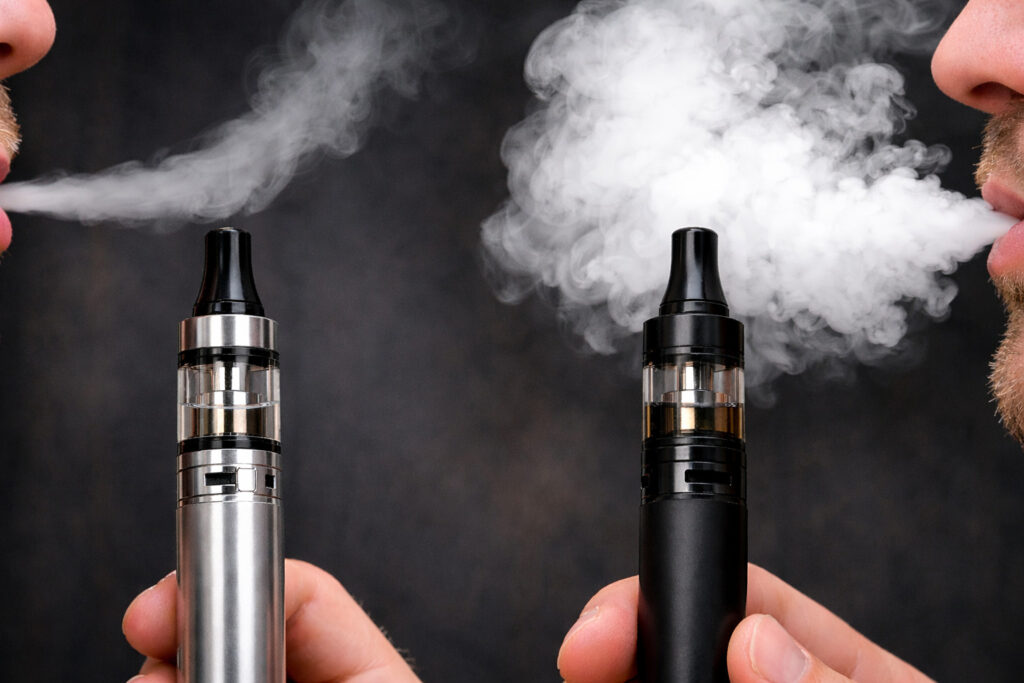
For consumers, this translates into a vape that feels refined rather than aggressive. For brands, it means fewer complaints tied to harshness or inconsistent draw quality.
Improved Compatibility With Coils and Wicking Systems
Terpenes also influence how oil behaves inside a device. Viscosity, flow rate, and residue formation are all affected by formulation choices. When terpene systems are poorly matched to modern hardware, issues like clogging, coil fouling, and uneven heating become more common.
| Formulation Outcome | Impact on Hardware |
|---|---|
| Balanced terpene ratios | More stable oil movement and airflow |
| Lower residue formation | Longer coil life and fewer failures |
| Predictable volatility | Consistent vapor output across draws |
| Reduced terpene overload | Less risk of leaking or clogging |
These factors matter most in sealed systems where users cannot adjust hardware settings. In those cases, formulation quality determines whether a device performs as intended or degrades prematurely.
More Predictable Sensory Outcomes
Beyond mechanics, live terpene systems contribute to sensory predictability. Because they start from a defined plant-derived profile, the flavor experience is more repeatable across batches. This consistency becomes especially important as brands scale production or roll out updates to hardware platforms.
When flavor behaves predictably, brands gain confidence in their ability to deliver the same experience across time, geography, and product formats. This is not just a quality benefit. It is an operational advantage that reduces reformulation cycles and customer churn.
As hardware continues to improve, formulations that work in harmony with device design will set the standard. Live terpenes fit naturally into this direction by supporting cleaner vapor, better coil compatibility, and sensory outcomes that remain stable as products and regulations evolve.
Why Post-Reform Brands Are Raising the Bar
As cannabis reform gains momentum, brands are operating under a new set of expectations. The conversation is shifting from what can be sold to how well products are built. In a post-reform environment, quality is no longer a nice-to-have. It becomes part of how credibility is earned with regulators, retail partners, and consumers alike.
Schedule III does not instantly simplify the market, but it does push it toward maturity. That maturity shows up in how brands think about formulation inputs, supplier relationships, and long-term product consistency. Shortcuts that once felt acceptable now carry more risk, especially when products are expected to perform reliably across batches, geographies, and hardware updates.
Compliance Pressure Changes Formulation Priorities

As oversight increases, brands are being asked to demonstrate control over their inputs. This includes terpene sourcing, testing protocols, and documentation that explains how a product behaves, not just how it is labeled.
- Clear sourcing and traceability become baseline requirements.
- Repeatable formulations reduce regulatory and operational risk.
- Ingredient transparency supports retailer and investor confidence.
In this context, flavor systems that rely on loosely defined blends or frequent post-processing adjustments become harder to defend. Brands that can point to stable, plant-derived terpene profiles are better positioned to meet evolving expectations without constant reformulation.
Repeat Purchase Economics Favor Consistency
Beyond compliance, there is a simple economic reality. In fact, vape brands succeed when customers come back for the same experience they enjoyed the first time. Inconsistent flavor breaks that loop.
| Inconsistent Flavor | Consistent Flavor |
|---|---|
| Lower repeat purchase rates | Stronger brand loyalty |
| Higher customer support costs | Fewer quality-related complaints |
| Frequent reformulation cycles | Stable SKUs over time |
| Discount-driven sales | Premium positioning |
As margins tighten, brands are paying closer attention to where inconsistency originates. Flavor drift caused by terpene variability is one of the most common and most expensive issues to correct after a product is already in market.
Scaling Requires Fewer Variables, Not More
Growth amplifies whatever weaknesses exist in a formulation. What works in a small batch does not always translate cleanly to national distribution or multi-hardware deployments.
Post-reform brands are responding by simplifying where they can and standardizing where it matters.
- Fewer ingredient substitutions across production runs
- More predictable behavior across hardware platforms
- Less reliance on last-minute flavor correction
Live terpene systems align with this approach because they reduce the number of variables that can shift over time. When the aromatic profile starts closer to the plant, less reconstruction is needed downstream.
The brands that raise the bar now are not doing so for optics. They are preparing for a market where accountability is higher, competition is sharper, and products are judged on how reliably they deliver the experience they promise.
What’s Next: Innovation, Education, and the Future of Live Terpenes
As cannabis reform continues to evolve, the role of terpenes is expanding beyond flavor alone. Live terpenes are increasingly being treated as a foundational input that connects formulation science, consumer experience, and long-term brand strategy. This shift opens the door to deeper innovation, better education, and more intentional product design across the vape category.
One of the clearest changes ahead is how brands approach innovation. Instead of chasing novelty through constant SKU turnover, manufacturers are focusing on improving the performance and reliability of core products. This includes dialing in terpene systems that behave predictably across hardware platforms, cannabinoid blends, and production environments.
Innovation Is Moving From Surface-Level to Structural
In the next phase of the market, innovation will be less about eye-catching flavor names and more about how well products are engineered. Live terpenes support this shift by giving formulators a more stable starting point.
- More precise control over aroma and vapor behavior
- Better alignment between terpene profiles and cannabinoid effects
- Improved performance across evolving vape hardware
This kind of progress tends to compound. When flavor behaves consistently, teams can spend more time refining user experience and less time correcting problems downstream.
Education Is Becoming a Competitive Advantage
As consumers become more informed, brands that can clearly explain their formulation choices gain trust more quickly. Terpenes are a natural entry point for this conversation because they are tangible, sensory, and easy to connect to experience.
Live terpene systems allow brands to educate without overcomplicating. Talking about freshness, strain accuracy, and consistency resonates more than abstract claims. This clarity also benefits internal teams by creating a shared understanding between marketing, R&D, and operations.
| Less Mature Messaging | More Mature Messaging |
|---|---|
| Potency-first claims | Experience-first explanations |
| Generic flavor descriptors | Strain-accurate profiles |
| Short-term hype | Long-term reliability |
Education also plays a role in how regulators and partners perceive the category. Clear, consistent formulation logic builds confidence and reduces friction as standards continue to develop.
The Future Is Built on Fewer Assumptions
Overall, the most important change ahead is cultural. The industry is moving away from assumptions and toward evidence. Products are expected to perform as described, batch after batch, without relying on last-minute adjustments or vague explanations.
In this case, live terpenes fit naturally into this future because they simplify rather than complicate formulation. They reduce the need for reconstruction and correction by preserving what already works in the plant.
As reform discussions continue and expectations rise, the brands that succeed will invest early in inputs and processes designed to hold up over time. Live terpenes are becoming part of that foundation, not because they are new, but because they align with where the market is headed.
To put it another way, this shift connects directly to the broader regulatory landscape shaping the next chapter of product development around live terpenes and cannabis rescheduling
To see how this shift connects back to the broader regulatory landscape, revisit and how it is shaping the next chapter of product development.
Why Live Terpenes Are Becoming the Default, Not the Differentiator

In general, what is happening with live terpenes mirrors what happens in every maturing category. Inputs that once felt optional gradually become expected. What used to be a differentiator becomes the baseline.
In cannabis vapes, live terpenes are moving into that role because they solve multiple problems at once, without adding new ones.
As reform discussions continue and Schedule III reshapes how cannabis products are evaluated, brands must demonstrate control, consistency, and intent in how they build products. This shift does not eliminate creativity. Instead, systems that can be repeated, documented, and scaled now support it.
For that reason, live terpenes reduce uncertainty by providing a clearer starting point for flavor, a more stable interaction with modern hardware, and a formulation approach that holds up under scrutiny. Rather than compensating for loss or inconsistency later in the process, they preserve what matters earlier.
From Competitive Edge to Category Standard
In the near term, brands using live terpene systems often stand out for flavor clarity and smoothness. In the long run, that distinction becomes less visible as consumer expectations rise. As a result, when enough products improve, the baseline moves.
On balance, this shift does not represent a disadvantage. It signals category health.
In effect, flavor becomes cleaner across the board.
At the same time, hardware performance becomes more predictable.
Consequently, consumers learn to trust labels again.
In this situation, brands that adopt higher standards early tend to benefit most from the transition. They spend less time reacting to complaints and more time refining experience. They also build internal processes that adapt more easily as regulation evolves.
Formulation as Long-Term Strategy
One of the clearest takeaways from the post-reform conversation is that formulation decisions are no longer just technical. They are strategic. Choices about terpene sourcing, volatility, and consistency directly affect supply chains, compliance posture, and brand equity.
Live terpenes support a formulation mindset that is forward-looking rather than reactive. They encourage fewer workarounds, fewer last-minute fixes, and fewer compromises as products scale.
This approach becomes increasingly valuable as brands expand into new markets, deploy multiple hardware platforms, or maintain flagship SKUs over longer lifecycles. When flavor behaves predictably, everything else moves faster.
A More Durable Path Forward
The cannabis vape market is not slowing down. It is settling in. As that happens, durability becomes more important than speed. Products are judged not just on first impressions, but on how reliably they deliver over time.
Live terpenes are becoming the standard in this environment because they align with that reality. They support cleaner vapor, clearer strain expression, and formulation systems that can withstand regulatory change without constant reinvention.
For brands building toward the future rather than the next release cycle, this shift is less about chasing trends and more about choosing inputs that make growth easier, not harder. In a more accountable market, that kind of clarity becomes a competitive advantage in itself.